Saturday, June 14, 2008


Thursday, June 12, 2008
Friday, June 06, 2008

 click the picture not the words butter ball turkey
seriously - don't bother with the turkey stuff!
Oh and don't forget the podcast
Thursday, May 29, 2008
Sunday, May 25, 2008

Saturday, May 24, 2008
Tuesday, May 20, 2008

Tuesday, May 13, 2008
Monday, May 12, 2008
Thursday, May 08, 2008
Tuesday, May 06, 2008
Critical & Contextual Research Tasks (read through them all and then choose ONE)
These are reasonably loose themes that you could deviate from slightly during the evolution of the outcome. However, the final outcome, spread over 8 continuous sides of your RWB should include at least 1200 words of ORIGINAL text. Of course you may refer to books, websites and so on. However, as usual you must acknowledge every source (author and title or website address is fine). Make rough notes on paper first rather than plunging straight in – plan the task a bit like an essay. Don’t worry too much about 5 hour stunning picture pages. Use drawing and painting selectively to draw attention to very specific details. Stick printouts (smallish and RELEVANT) amongst the text to support your arguments and descriptions. No rainbow backgrounds etc – this text must be easy to read – but don’t actually type it out and paste it in! Which ever them you choose you must focus on describing the works in detail with good use of Art specific language. Use metaphor, but not waffle! Compare work from different cultures/time periods. Explain the CONTEXT in which the work was made: by whom? For whom? When? Why? What is its function? The work needs to be legible and well presented, but the content is the key – written and visual, so don’t spend hours decorating these pages. Where possible make connections between the work that you are describing and your own projects and interests.
1: The changing impact of Art when removed from its intended location.
Comparing the potentially diminished impact of religious art when transplanted from church/temple to gallery/museum and graffiti when taken from walls, trains, subways to the ‘safe’ middleclass gallery environment. Giotto, Michelangelo, Haring, Basquiat, Kenny Scharf etc. Does an artefact (such as a mask) with powerful symbolic meaning in its native culture become something else (for better or worse) when transplanted to a gallery. Does putting an ‘everyday’ object into a gallery make it into ‘Art’?
2: Group Identities, Boundaries and Borders in Art
How and why do groups of people (nationalities, religions, armies, tribes, gangs, football clubs, companies etc) display their group identities through art and visual imagery? How might groups of people be identified by ‘outsiders’? (think of how you chose to represent countries by food – what other symbols or clichés might work in the same way)
Some Ideas:
Look at propaganda paintings (American ‘Uncle Sam’, British ‘Your Country Needs You’, German, Russian, Italian & Japanese posters from the 2nd world war for example) Soviet Socialist Realism etc
Masks, Uniforms and Costumes from various tribes, groups and societies (from the Masaai and the Spanish navy to the Iroquois and the Ku Klux Klan)
Badges, Logos and Icons – from paintings of crucifixions in an Italian Church to the ‘Lupetto’ of AS. Roma Modern Graffiti on trains, walls etc.
History paintings – battles, conquests and maps. Look at Albrecht Altdorfer, Paolo Uccello , Simone Martini, Ambrogio Lorenzetti. The Bayeux Tapestry etc
3: ‘Talking about Art is like dancing about Architecture’ (Frank Zappa)
Can one art form explain another?
How have visual artists tried to depict performance and music in their work?
Japanese prints of theatrical performance (Hiroshige, Hokusai etc)
European painting and sculpture: Degas, Caravaggio, Fiorentino, Watteau, Italian futurist paintings (and music), Breughel, Lautrec, Max Beckmann, Picasso’s Circus performers etc.
Masks and costumes that express the role of the wearer – from various African nations and tribes, theatrical masks from China, Japan, Greece etc.
How has music been influenced by visual artists and vice versa?
Many visual artistic movements/styles had a musical equivalent (Baroque, Impressionist, Modernist, Dadaist)
Schoenberg (painter and composer), Matisse (La Danse, La Musique etc), Mondrian (Broadway Boogie Woogie)
4: Symbiosis: Humans and Nature in Art.
Investigating art that suggests the strength of the relationship between humankind and the environment around it.
Possible artists:
Pre 20th Century European: Metamorphosis – plants and animals into humans - Bosch, Bernini, Arcimboldo etc
Modern European: Andy Goldsworthy (abstract forms from natural materials), Anthony Gormley, Sophie Ryder (animal human creatures), Land Art – Robert Smithson. Picasso’s Centaurs etc.
Non European: Ritualistic animal masks, fetishes and totems from a variety of cultures: North and South American, African etc. Hindu animal human hybrid gods etc.
What do these metamorphic or hybrid beings suggest about human origins, relationships with nature and each other?
Romantic Art – the idea of humans at the mercy of the immense power of nature Caspar David Freidrich, JWM Turner, Albert Bierstadt etc
5: How has the image of women (as a subject) in Art changed through the 20th century?
- Liberation?
- Emancipation?
- Effects of 2 world wars, new technology etc…
- Political change including the vast increase in the number of women artists.
- Feminism.
Look at Picasso, Klimt, Modigliani, Giacometti, Warhol, Gwen John, Frida Kahlo, Dali, Freud, Jenny Saville, Paula Modersohn-Becker, Tracey Emin, Mona Hatoum, Sarah Lucas, (amongst others!) Read Germaine Greer on the subject for a feminist perspective "The Obstacle Race: The fortunes of women painters and their work", (book in the library)
6: Abstraction, patterns and geometry
How can artists express meaning without showing ‘realistic’ cows, people and hills in their work? OK this title is a bit flippant, but for this project you will compare the ways in which artists and craftspeople from at least 2 different cultures avoid direct representation in their work yet still tell us something about the world and society in which they live and make their Art.
This might include aspects of 1950s American Abstract Expressionist painting http://en.wikipedia.org/wiki/Abstract_Expresionism ,
traditional Islamic architectural patterning see http://en.wikipedia.org/wiki/Arabesque
or some forms of Australian indigenous Art see: http://en.wikipedia.org/wiki/Australian_Aboriginal_art
(the wikipedia links are only there as very basic starting points.
Thursday, April 24, 2008


Thursday, April 10, 2008

Wednesday, April 02, 2008
2 links:
ONE
TWO
lots of amazing links - look at all of them!
Then choose 2 artists/designers from each site and produce 10 sides (split between the 4) of funky, illustrated, critical & contextual research - where is this work coming from? Who is it made for? How does it reflect the time period/society that it evolved in?
AND - HOW WILL IT RELATE TO YOUR OWN NEW WORK?
TOTAL 10 SIDES SPLIT BETWEEN THE 4 ARTISTS/DESIGNERS (THAT'S 2 MAIN SITES AND YOU CHOOSE 2 DIFFERENT PEOPLE/COLLECTIVES FROM EACH)
plenty of notes needed - yes even whole pages (but NOTHING just copied out or pasted)
Monday, March 24, 2008

Friday, March 14, 2008

Look Year 12s!
Just because your project starts off with a 2 dimensional support it doesn't mean that you are limited to working with 'flat' paint....


Friday, January 25, 2008

Friday, January 18, 2008
Thursday, December 27, 2007

Friday, December 21, 2007
Monday, December 17, 2007

Monday, December 10, 2007

Tom Wood He's just fantastic (I think) Look Here (and particularly check out the galleries of his paintings and sketchbooks on the right side)
Saturday, December 08, 2007

Monday, December 03, 2007
Sunday, December 02, 2007

surely this must be useful or interesting to some of you?
(click the picture)
Wednesday, November 21, 2007

Friday, November 09, 2007

Wednesday, November 07, 2007
Wednesday, October 31, 2007
More Marisol

Friday, October 19, 2007

Wednesday, September 05, 2007

Wednesday, July 25, 2007

Tuesday, June 26, 2007


Wednesday, June 13, 2007

Monday, June 04, 2007
Friday, May 25, 2007
Summer Task for New IB Artists
Your summer holiday task forms the beginning of your I.B. Art practical work and research studies coursework upon which your entire final grade is based. It should therefore be completed to a very high standard of presentation and content.
First get yourself a Research Workbook ! They Must be A4 size (30cm x 20cm approx.) hard bound (usually in black ) with 140 pages (280 sides). They normally cost around €15.
Scale - how does a work of art’s size affect the viewer (and how is seeing an actual work of art different from seeing a reproduction in a book or on the internet for example?)
· Materials - what is it created from ?- why? - what effect does the material give?
· Content - what does the work represent ? Narrative - does it tell a story ? Does the time and place in which the piece was made affect the style and intended meaning of the work? give your personal interpretation.
· The Artist - Who ? When ?
· Even basic descriptions of colour, shapes etc. are useful - how is the mood or atmosphere of a piece affected by the artists use of colour, texture, line, pattern etc. ?
· Value judgement - is the piece successful ? Why ?
· Why was this piece of Art created? Who paid for it? Why? What task does this piece of Art hope to perform? Instruction etc?
One ‘portrait/head’ related art form that is present in many diverse cultures is the mask or head dress. Therefore, as part of your research will fill at least 6 sides with drawings, paintings, photographs and notes on this theme which will form the basis of your research. For example: Native American headgear, gas masks, gimp masks, Japanese theatrical masks, motorcycle helmets, Venetian carnival masks, traditional tribal masks from various African nations, cricket masks, hockey masks, armour, skulls of animals, fish and birds, diving masks and helmets, welding masks, Egyptian burial masks, etc etc etc….
The theme of the poster is ‘The Right To Food'. This must be written clearly on your poster (in any language) Your poster can be between 30 x 40 cm and 50 x 70 cm (see me for paper). Aim to illustrate the idea of self help rather than hand outs to the poor. Have a look at www.fao.org/wfd/ and also www.feedingminds.org for more ideas. Do a couple of pages of research and studies in your book before making the final poster. Be bold – which posters do you remember most clearly? which were most effective in communicating their message to you?
Friday, May 18, 2007

Wednesday, May 16, 2007
Tuesday, May 15, 2007

Wednesday, April 18, 2007

A great website about books - including artist made books and sketchbooks (not the same thing!)
CLICK ME
Friday, April 13, 2007

OK - you think that Reading is a cool festival? Ha - even Mr Morgan has done that one!
What you need is
BURNING MAN
Thursday, April 12, 2007
HERE
Thursday, March 29, 2007

Wednesday, March 14, 2007
CLICK HERE
be patient it will take a couple of minutes to load
This is probably what Renesa's brain is like....
Monday, March 05, 2007


Year 12 IB Art:
Developing new projects
Wednesday, January 31, 2007
Final information for Y13 Art
Final deadline for all Studio Work and Research Workbooks is March 9th. Anything given in after this date will not be marked by myself or the external examiner or included in the exhibitions. There can be absolutely no exceptions to this deadline.
Research Workbooks will not be available to candidates again until the day of their interview. They must then be left in school until the final Diploma grades are published.
Candidate Record Booklets must also be completed before March 9th. This includes:
- Photographs of 12 of each candidates best projects. Some projects may need 2 photographs to show them properly. Candidates take all photos themselves. The Art department will arrange printing if cropped and checked jpeg image files are provided to Mr Morgan no later than March 5th.
- 20 pages from the 360+ pages that an average candidate is expected to produce are selected (in consultation with myself) and photocopied. If candidates want colour photocopies then they will have to make their own outside of school. This is highly advisable in the case of colourful pages!
- Candidate Statement – Candidates will start on these next week 300 words max.
Interviews with the external examiner will take place on March 29th & 30th.
Tuesday, December 19, 2006

Thursday, December 14, 2006

Tuesday, December 12, 2006
Year 12 IB Art Project 2
Remaining 5 sides for this month::
Observational drawing work - wrap 7 different objects in newspaper, string and selotape. Arrange them into a still life and draw them in a range of different media (biro, pastel, charcoal, pencil, paint etc)
Studio Work (Jan 9th onwards)
Parts 4 & 5: (simultaneous): Using the final image to develop a block print that will be taken to at least 3 colour stages.
4 A1 sheets + multiple A3 & A4 experiments. You will also make a relief sculpture centred around a 3-dimensional realisation based upon your image. The ‘portrait’ sculptures will expand/be framed/explode outwards so as to continue the idea of the character at the centre (look at previous year 12s’ project for a clearer understanding of this)
Monday, December 11, 2006

Tuesday, December 05, 2006

Monday, December 04, 2006

Friday, November 24, 2006
CLICK ON THE LINK AND WORK THROUGH THE SITE
THIS WILL HELP YOUR CRITICAL WRITING ABOUT ART A LOT!
Wednesday, October 25, 2006
Completed by November 13th
Choose ONE of the following:
Group Identities, Boundaries and Borders in Art
How and why do groups of people (nationalities, religions, armies, tribes, gangs, football clubs, companies etc) display their group identities through art and visual imagery? How might groups of people be identified by ‘outsiders’? (think of how you chose to represent countries by food – what other symbols or clichés might work in the same way)
Some Ideas:
Look at propaganda paintings (American ‘Uncle Sam’, British ‘Your Country Needs You’, German, Russian, Italian & Japanese posters from the 2nd world war for example) Soviet Socialist Realism etc
Masks, Uniforms and Costumes from various tribes, groups and societies (from the Masaai and the Spanish navy to the Iroquois and the Ku Klux Klan)
Badges, Logos and Icons – from paintings of crucifixions in an Italian Church to the ‘Lupetto’ of AS. Roma
Modern Graffiti on trains, walls etc.
History paintings – battles, conquests and maps. Look at Albrecht Altdorfer, Paolo Uccello , Simone Martini, Ambrogio Lorenzetti. The Bayeux Tapestry etc.
When does Art become garment and garment become Art? How does fashion influence Art and vice versa?
Ritual and performance. For example: masks of the Fang people of West Africa, Japanese Noh theatre masks, North American traditional headdresses, Australian Aboriginal body painting. The costumes and contraptions of modern artist Rebecca Horn. (etc etc etc)
Where does the basic function (covering, protection, warmth etc) become less importance than the aesthetic appearance?
Fashion as a visual statement of politics and ideologies: Flapper girls in the 20s, Punks in the 70s, Hippies in the 60s etc
Influences in both directions – Pop Art, Op Art, Conceptual Art.
How does fashion in post War Britain (for example) reflect social and artistic change?
‘Talking about Art is like dancing about Architecture’ (Frank Zappa)
Can one art form explain another?
How have visual artists tried to depict performance and music in their work?
Japanese prints of theatrical performance (Hiroshige, Hokusai etc)
European painting and sculpture: Degas, Caravaggio, Fiorentino, Watteau, Italian futurist paintings (and music), Breughel, Lautrec, Max Beckmann, Picasso’s Circus performers etc.
Masks and costumes that express the role of the wearer – from various African nations and tribes, theatrical masks from China, Japan, Greece etc.
How has music been influenced by visual artists and vice versa?
Many visual artistic movements/styles had a musical equivalent (Baroque, Impressionist, Modernist, Dadaist)
Schoenberg (painter and composer), Matisse (La Danse, La Musique etc), Mondrian (Broadway Boogie Woogie)
Symbiosis: Humans and Nature in Art.
Investigating art that suggests the strength of the relationship between humankind and the environment around it.
Possible artists:
Pre 20th Century European: Metamorphosis – plants and animals into humans - Bosch, Bernini, Arcimboldo etc
Modern European: Andy Goldsworthy (abstract forms from natural materials), Anthony Gormley, Sophie Ryder (animal human creatures), Land Art – Robert Smithson. Picasso’s Centaurs etc.
Non European: Ritualistic animal masks, fetishes and totems from a variety of cultures: North and South American, African etc. Hindu animal human hybrid gods etc.
What do these metamorphic or hybrid beings suggest about human origins, relationships with nature and each other?
Romantic Art – the idea of humans at the mercy of the immense power of nature Caspar David Freidrich, JWM Turner, Albert Bierstadt etc
Artistic reference to stage, performance and theatre in a number of cultures. How does the social and cultural context of the performance influence its visual representation in another art form? Degas, Lautrec, Schiele, Hogarth, Japanese artists such as Hiroshige, Hokusai and Kunisada, Traditional African /art itself interwoven with the performance). Japan
How has the image of women (as a subject) in painting changed through the 20th century? Liberation? Emancipation? Political change including the vast increase in the number of women artists. Feminism. Look at Picasso, Klimt, Modigliani, Giacometti, Warhol, Gwen John, Frida Khalo, Dali, Freud, Jenny Saville, Paula Modersohn-Becker (amongst others!) Read Germaine Greer on the subject for a feminist perspective "The Obstacle Race: The fortunes of women painters and their work", (book in the library)
The changing roles of the human figure in Art in the 19th & 20th centuries – from portraiture to symbolic presence. Cezanne (figure as motif rather than specific portrait) through Expressionism/Cubism’s distortions and simplifications, then body art and performance of 60s & 70s. Move on into the recent work of artists like Gormley in which the body is represented as a volume in space, a symbol or a vessel.
The changing impact of Art when removed from its intended location. Comparing the potentially diminished impact of religious art when transplanted from church/temple to gallery/museum and graffiti when taken from walls, trains, subways to the ‘safe’ middleclass gallery environment. Giotto, Michelangelo, Haring, Basquiat, Kenny Scharf etc.
The continuing presence of the painted portrait in the age of photography. What can painted portraiture offer to the artist/viewer that photography can not? How has photography freed the painter from the need to reproduce only the ‘straight forward’ likeness of the sitter? How has photography fed the painters’ imaginations and furthered the development of painting? Bacon, Nash, Hockney, Degas, Sickert, Jenny Saville, Richard Billingham etc. Read some Susan Sontag on this subject Review of her book ‘On Photography’ with a few quotes: http://www.photo.net/books/on-photography or this Sontag
.
Monday, October 09, 2006
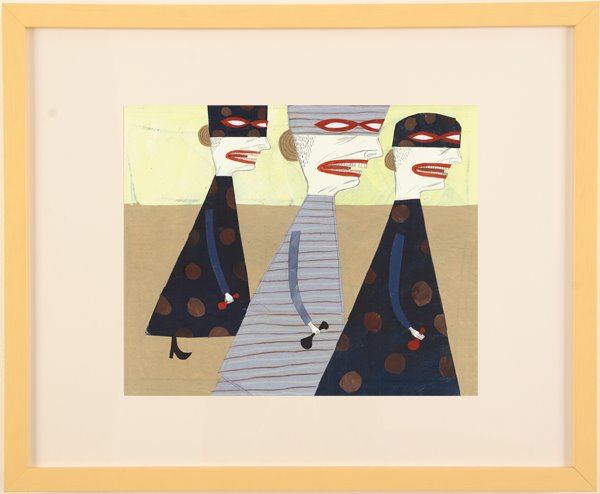
Year 12 & 13 RWB task
Go to this GALLERY
(online!)
Write and illustrate a 4 page critique of the work of 2 artists whose work interests you. They don't have to be obviously relevant to your own current project.
I want drawings, paintings and your own ideas - not print outs!
Wednesday, October 04, 2006
Tuesday, October 03, 2006

Thursday, September 28, 2006
Have a look at the following films on YouTube
They are all possible in school - they just take a lot of time...
The Shell's Secret
Self Portrait
Painter Sketch