Art Extended Essays
2 examples of very good or excellent essays in Visual Arts
Essay 1
Essay 2
Read them through!
Friday, June 16, 2006

Tuesday, June 13, 2006

Summer Holiday Task for Pupils Beginning I.B. Art in September 2006
Your summer holiday task forms the beginning of your I.B. Art practical work and research studies coursework upon which your entire final grade is based. It should therefore be completed to a very high standard of presentation and content.
· First get yourself a Research Workbook ! They Must be A4 size (30cm x 20cm approx.) hard bound (usually in black ) with 140 pages (280 sides). They normally cost around €15. I know it seems a bit mean expecting you to buy your own, but if I bought everyone a book then we’d have less money for paint, paper, clay etc. etc…. Also I feel students are less likely to leave their book on the bus, or drop it in the river if is their own.
The Research tasks:
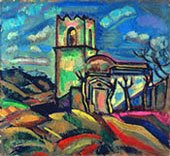
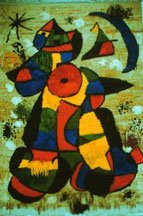
· Scale - how does a work of art’s size affect the viewer (and how is seeing an actual work of art different from seeing a reproduction in a book or on the internet for example?)
· Materials - what is it created from ?- why? - what effect does the material give?
· Content - what does the work represent ? Narrative - does it tell a story ? Does the time and place in which the piece was made affect the style and intended meaning of the work? give your personal interpretation.
· The Artist - Who ? When ?
· Even basic descriptions of colour, shapes etc. are useful - how is the mood or atmosphere of a piece affected by the artists use of colour, texture, line, pattern etc. ?
· Value judgement - is the piece successful ? Why ?
· Why was this piece of Art created? Who paid for it? Why? What task does this piece of Art hope to perform? Instruction etc?
· Part Two : Research for IB Coursework Project
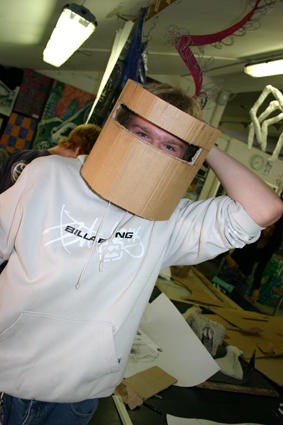
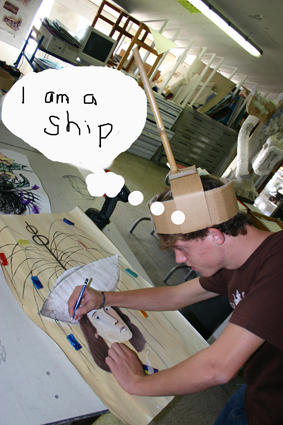
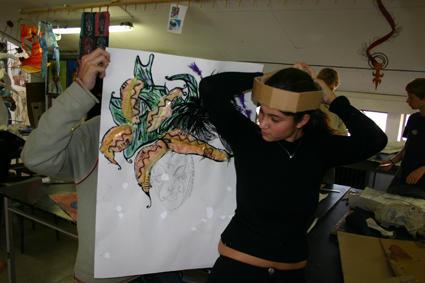
Native American headgear, gas masks, gimp masks, Japanese theatrical masks, motorcycle helmets, Venetian carnival masks, traditional tribal masks from various African nations, cricket masks, hockey masks, armour, skulls of animals, fish and birds, diving masks and helmets, welding masks, Egyptian burial masks, etc etc etc….
The theme of the poster is ‘Investing in Agriculture for Food Security’. This must be written clearly on your poster (in any language) Your poster can be between 30 x 40 cm and 50 x 70 cm (see me for paper). Aim to illustrate the idea of self help rather than hand outs to the poor. Have a look at www.fao.org/wfd/ and also www.feedingminds.org for more ideas. Do a couple of pages of research and studies in your book before making the final poster. Be bold – which posters do you remember most clearly? which were most effective in communicating their message to you?
Year 12 IB Art Holiday Task
The Research Workbook tasks:
· Scale - how does a work of art’s size affect the viewer (and how is seeing an actual work of art different from seeing a reproduction in a book ?)
· Materials - what is it created from ?- why? - what effect does the material give?
· Content - what does the work represent ? does it tell a story ? give your personal interpretation.
· The Artist - Who ? When ?
· Even basic descriptions of colour, shapes etc. are useful - how is the mood or atmosphere of a piece affected by the artists use of colour, texture, line, pattern etc. ?
· Value judgement - is the piece successful ? Why ?
· Scale - how does the building, monument or built environment relate on a “human scale” - does it “dwarf” people - why? (to impress, to accommodate a specific use, to inspire fear, devotion etc.)
· Inspiration/style - can you see any connections with art or design movements (Art Nouveau, Neo Classical, Art Deco, Modernism? Etc.)
· Decoration - is it decorated ? Why? - Why would you decorate a building? In what style ? Describe - organic (plant forms etc.), geometrical simplicity etc .
· How well does the space, monument or building fulfil its intended role ?
· How does it relate to the location in which it is placed (natural environment, other buildings etc.?)
At least 10 sides relating to images, artefacts, techniques, experimentation observations and artists’ work connected with your chosen theme for you first personally directed project. Good preparation is essential for a successful project. Take loads of photographs, make loads of drawings – even stuff which is too large to fit in your book. Go nuts – develop an obsession!
Tuesday, June 06, 2006
Thursday, May 18, 2006
Sunday, April 09, 2006
Year 12 I.B Art
Easter task (included in RWB work from 10th April – 10th may)
Critical & Contextual Research
For example: Italian Futurist Art was inspired by the technology of the heavily mechanized era in which it was created. Electricity, aircraft, racing cars etc were all exciting new phenomena at the start of the 20th Century. Artists such as Balla and Severini made works that expressed the energy and movement of the new world around them. This mood of optimism was killed (along with many of the artists that made up the Futurist movement) by the horrors of modern warfare that began with the First World War in Europe. Could you imagine artists working in the polluted 21st Century making painting that praised the motorcar?
Part One: You are to produce 8 or more new pages of writing, diagrams and illustrations in which you answer the following critical and contextual question:
Links (to start you off...)
BUT DON'T COPY AND PASTE DIRECTLY FROM THIS STUFF!
Part Two:
(5 sides or more)
Part Three:
Continue to develop your current project – write & illustrate a record of how it is proceeding and how it might develop in other ways. Make sure that you have done adequate additional research for your next project. The research and development work is graded along with the studio work itself – you have to show where your work came from and how and why it evolved.
(Total 20 sides or more) Use the links at http://saintgeorgesart.blogspot.com/ for extra help
Tuesday, March 21, 2006
If you are interested in
a) fairies
b) mechanisms
c) interesting sculptures
click on this link
????????????
a) fairies
b) mechanisms
c) interesting sculptures
click on this link
????????????
Wednesday, February 15, 2006
Year 12 IB Art Half Term Checklist
By Monday 6th March you should have completed:
| Title | Completed? | Grade? |
| WORLD FOOD DAY POSTER | | |
| GRAPHITE A1 MASKS STUDIES | | |
| A1 DESIGN SHEET FOR MASK | | |
| SCULPTURE (MASK, HEADGEAR ETC) | | |
| CHARCOAL A1 PORTRAIT SHEET | | |
| PAINTING WITH MASK ON HARDBOARD | | |
| PRINTING WORK: MIN. 4 A1 SHEETS TO 3 STAGES + 7 A3 SHEETS | | |
| SCULPTURE WITH CLAY HEAD | | |
| RWBS UP TO DATE (INC | | |
Planning your next projects.
After the holiday you will complete 3 A1 studies based on imagery from
Then you will start your own projects developed from your
Brief
Plan, research and create 2 or more major studio pieces inspired and developed from your
Available media:
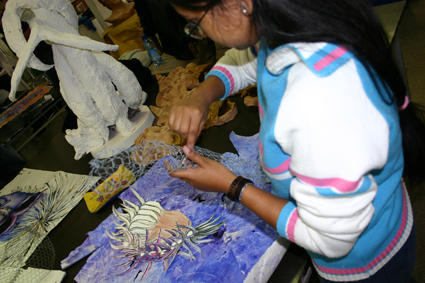
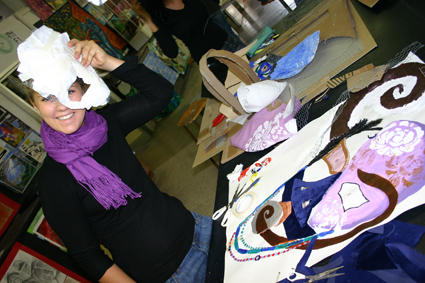
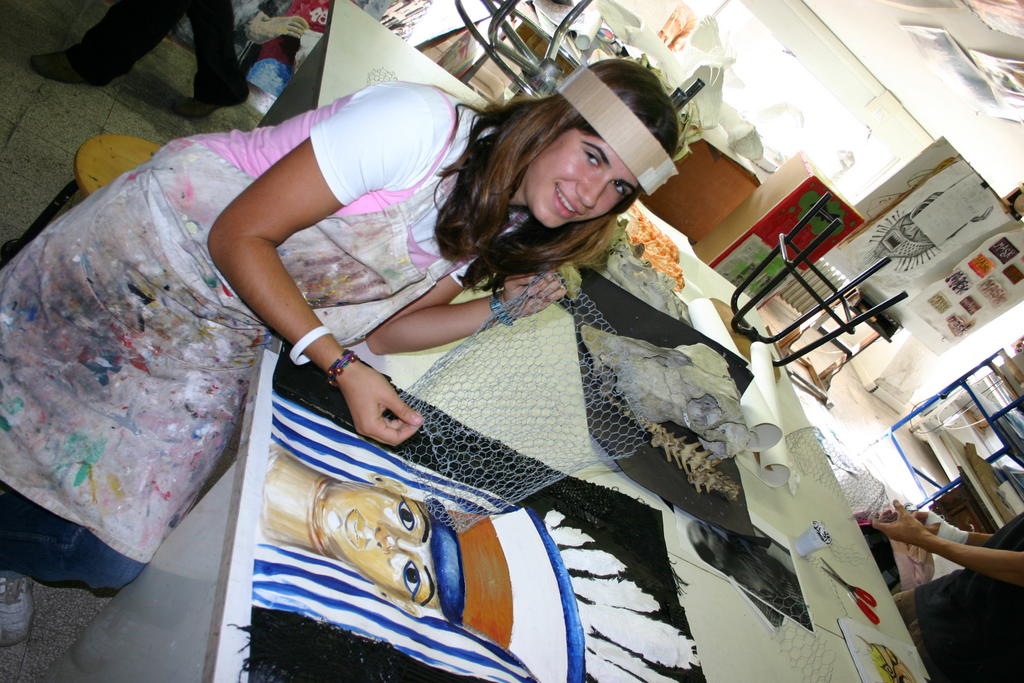
Clay, Batik, Cardboard. Wood, Oil Paint, Acrylic Paint, Lino Printing, Digital Media, Wire, Chicken Wire, Latex, Stucco, Plaster, Ink, Graphite, Fabric, Paper, Adhesives, Found Objects, Watercolour, Collage Materials, Dyes.
You can sculpt, sew, print, paint, assemble and draw in any combination of the above media in both 2 and 3 dimensions.
Your work might explore:
Colour, texture, line, form, surface, light, pattern, movement, and structure in relation to the imagery, artefacts and environments that you explored
You will need to adopt a developmental and experimental approach in order to achieve the best result. Don’t just think of one idea and stick to that. Be wild, develop an obsession – push your ideas to the limit! Devote 10 sides minimum to the planning of your own ideas for this project – explain your ideas and decisions in detail.

Sunday, January 08, 2006
Thursday, December 08, 2005
Year 12 IB Art Project 2 (until half term)
Visualisation of a character described in a song leading to relief sculpture and block printing.
Initial Research in RWB (from now until January 9th)
Part 1: Choose a passage from a song that describes an individual character (possible examples below)
Do not choose a song and then do a picture of the actual singer (no Kurts, Bobs or Jimmies please!!!)
Part 2: Find lots of images of people that fit your conception of that character. This may be from your own photographs, magazines, newspapers, paintings by other artists etc.
Part 3: Draw and paint these images in various media. Be experimental. Use collaged photocopies and magazine pictures cut up and pasted together (certainly by hand and also possibly using PhotoShop etc). Work and rework the existing faces to create something new. Work over images in paint, pencil etc. Photocopy the final images and work over them again.
The above work should fill at least 9 sides in your book.
Make these pages funky and busy – they should be working pages – integrate notes, lyrics and imagery.
Also 3 sides (minimum) illustrated research into printing techniques including: Linocut, Silkscreen, Etching and Woodcut.
Studio Work (Jan 9th onwards)
Parts 4 & 5: (simultaneous): Using the final image to develop a block print that will be taken to at least 3 colour stages.
4 A1 sheets + multiple A3 & A4 experiments. You will also make a relief sculpture centred around a 3-dimensional realisation based upon your image. The ‘portrait’ sculptures will expand/be framed/explode outwards so as to continue the idea of the character at the centre (look at previous year 12s’ project for a clearer understanding of this)
| The Beatles - Eleanor Rigby Eleanor Rigby, | The Sex Pistols – Anarchy in the UK I am an antichrist |
The Happy Mondays – Kinky Afro Son, I’m 30I only went with your mother ‘cause she’s dirtyAnd I don’t have a decent bone in meWhat you get is just what you see yeahI should so I take it free yeahAnd all the bad preserves be things that feed meI never help or give to the needyCome on and see me | PIXIES - Ed Is Dead Her head is in a bitter wayHer brain's on fireShe's just looking for the perfect waveIt's her brain's desireI'll think of her when I walk the strand |
Rolling Stones - Sympathy For The Devil Please allow me to introduce myselfI'm a man of wealth and tasteI've been around for a long, long yearStole many a man's soul and fateAnd I was 'round when Jesus ChristHad his moment of doubt and painMade damn sure that PilateWashed his hands and sealed his fatePleased to meet youHope you guess my nameBut what's puzzling you Is the nature of my game | BLUR - Country House He's got morning glory; life's a different storyEverything going jackanory, in touch with his own mortalityHe's reading Balzac, knocking back ProzacIt's a helping hand that makes you feel wonderfully blandOh it's the century’s remedy For the faint at heart, a new start |
Tuesday, October 25, 2005


Sunday, October 16, 2005
‘True art takes note not merely of form but also of what lies behind.’
In the next stage of your project you will observe and record yourself in a range of 2-dimensional media. As always you will link your Studio Work with your Research Workbook studies. By next marking day you must have completed:
At least 8 sides of portrait observations of yourself in materials including, but not limited to: PENCIL, PAINT, COLLAGE, PHOTOGRAPHY, CHARCOAL, OIL PASTEL, and BIRO (PEN).
Some pages may be a compilation of rapid studies, others might be longer, more precise single images. Use several mirrors, try drawing yourself from unusual angles, in the back of a spoon etc! Do some ultra detailed close up studies of eyes, mouths, noses etc. Do several continuous line drawings on the same page from different angles.
At least 12 sides of research into portrait painters and painters of the human figure. This should include studies from their work in appropriate media (thick, impasto brush marks if you are working from Van Gogh for example). You should compare the work of 3 or 4 different artists. You should choose painters who have approached the portrait in diverse ways. For example the dynamic, heavy, slow expressionism of Frank Auerbach compared to the delicate precision of Albrecht Durer.
Your writing should explain when, why and how the portraits were made. How does the time and place in which they were painted affect the final painting? Is it an image of a King painted by a well-paid official court portraitist or a group of 19th Century Dutch peasants painted by an artist with an interest in describing social problems and poverty? Your notes are as important as your images – your RWB is not just a sketchbook. Write about brushwork, style, technique, colour, mood, composition, realism versus caricature. How do the pose and the costume of the person being painted tell us a story of their life, status and character? Are they naked on a bed or gazing down at us in full battle armour on the back of a horse? Are they placed higher or lower than the other people in the painting? Does the painter aim to flatter them or to show them as they really are - ‘warts and all’? Why?
Consider if there is still a place in the world for the painted portrait in the age of photographic and digital imagery. Can a painter tell us something about the subject that a photographer can’t? How?
Do you agree with the quote by Gandhi? How can a painted portrait show us what is underneath or inside of the character of the person being painted – or is painting only meant to act like a camera: recording the image created by light reflected from the object/person in front of it?
Some Names: Frank Auerbach, Frans Hals, Picasso, Rembrandt, Jenny Saville, Frida Kahlo, Tom Wood, Berthe Morisot, Artimesia Gentileschi, Lucian Freud, Gwen John, Matisse, De Kooning, Georg Grosz, Hans Holbein, Gilbert & George, Giotto, Klimt, Hundertwasser, Munch, Roualt, Francis Bacon, Durer, Gauguin, Modigliani, Giacometti, Chardin, Dubuffet, Caravaggio, Botero, Egon Sciele, Goya, Van Gogh, Velazquez, Otto Dix, Alice Neel, etc.
http://www.artquotes.net/ Quotes about Art (yes writing!)
http://www.npg.org.uk/ The national Portrait Gallery
http://saintgeorgesart.blogspot.com/ Art at Saint George’s
http://www.artchive.com/artchive/F/freud.html Lucian Freud
http://www.artcyclopedia.com/index.html
http://www.nationalgallery.org.uk/
http://members.aol.com/fridanet/kahlo.htm Frida Kahlo
http://www.geocities.com/craigsjursen/index.html
Site about Jenny Saville (work shown above)
http://www.ibiblio.org/wm/paint/auth/rembrandt/
(Mr Morgan’s favourite – Rembrandt!)
‘I paint self-portraits because I am so often alone, because I am the person I know best.’


Subscribe to:
Posts (Atom)